
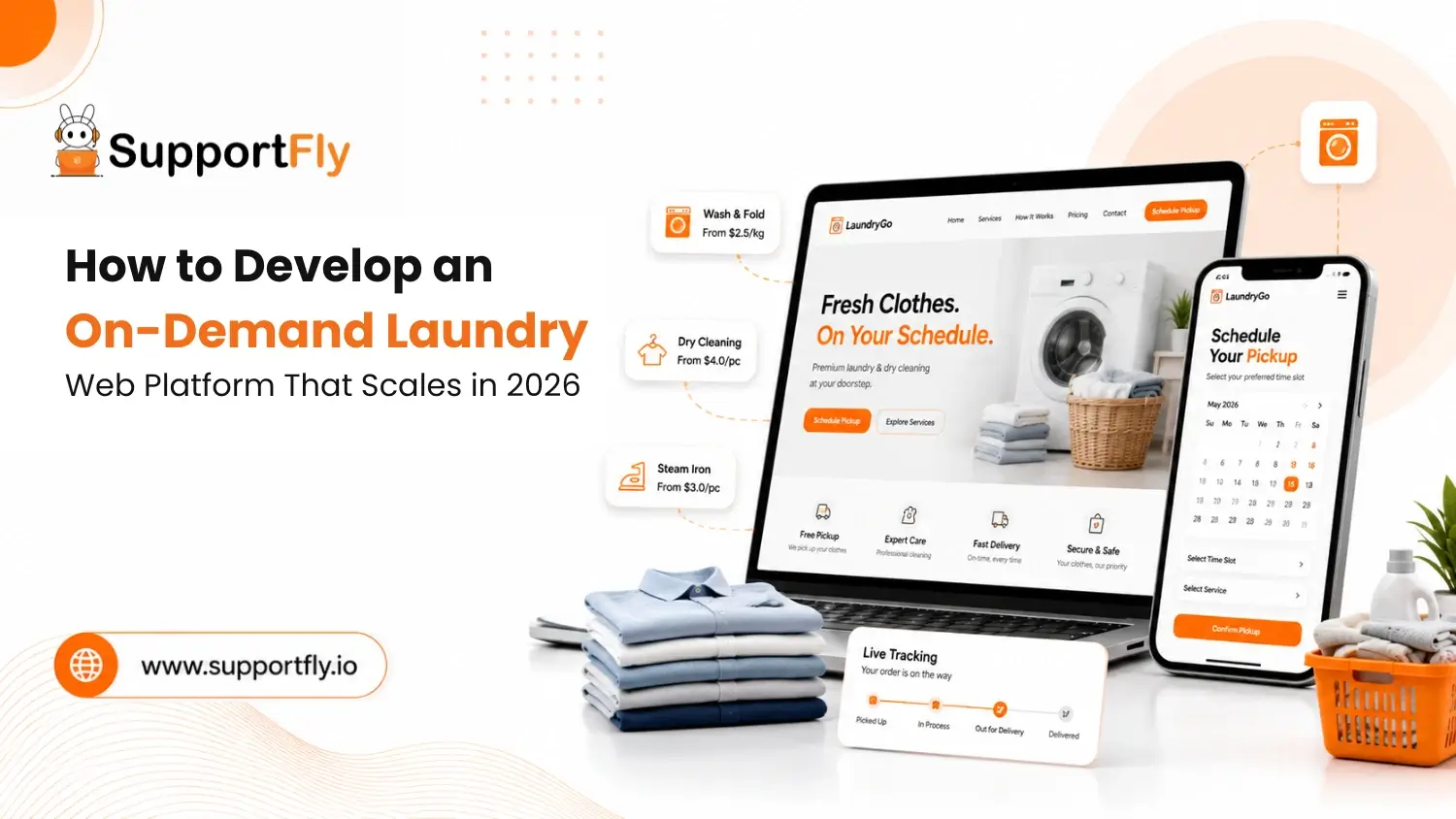
Like everything, the laundry business has also changed a lot over the last few years. Customers don’t want to call stores for pickup timing or wait for manual updates through SMS. Most users now expect the same experience they get from food delivery or ride-booking apps – quick scheduling, live order tracking, easy payments, and instant support from any device. That shift is exactly why on-demand laundry startups are investing heavily in scalable web platforms. From customer bookings to staff coordination, a modern laundry platform handles most work on its own from one centralized dashboard. However, if the platform is poorly built, things can become difficult very quickly. Web development companies like SupportFly excel at laundry web development that are designed for automation and long-term scalability from day one. Let’s learn more about how to develop an on-demand laundry web platform.
Table of Contents
How to Develop an On-Demand Laundry Web Platform That Scales in 2026
Start With a System, Not Just a Website
One mistake many laundry businesses still make is treating web development like a design project, when actually it’s supposed to be an operations project. An on-demand laundry platform should not only “look clean.” It should reduce operational friction behind the scenes. Every customer action needs to connect smoothly with pickups, staff workflows, delivery routing, and payment systems. That usually means building a structured backend architecture that can manage increasing orders, multiple service zones, and real-time operational updates without slowing down during peak traffic hours. In 2026, scalability matters early because customer behavior changes fast once convenience starts working. A laundry business that handles 30 orders a day today might suddenly handle 300 after local marketing campaigns. You never know, so you must be prepared at all times.
Mobile-First Development is No Longer Optional
Most users booking laundry services now come through smartphones. They open Instagram ads, search “laundry near me” on Google, or revisit platforms directly from mobile browsers. If the platform feels cluttered or slow on mobile devices, conversion rates drop immediately. This is why modern laundry platform development focuses heavily on:
Fast-loading mobile interfaces with simplified booking flows, one-tap scheduling, and clean checkout systems that reduce customer drop-offs during the ordering process
At SupportFly, mobile responsiveness is treated as a core infrastructure requirement rather than a secondary design adjustment added later.
Real-Time Order Tracking Changes Customer Trust
Customers become uncomfortable when they do not know where their order is. One of the biggest reasons modern laundry platforms retain users better is transparency. Real-time order tracking now plays a huge role in customer satisfaction because people expect live updates throughout the process. A scalable laundry platform should allow users to:
Track pickup status, washing progress, delivery timing, and payment confirmations directly from their dashboard without needing to contact support repeatedly. This reduces customer support pressure while improving trust. For growing laundry businesses, fewer support calls usually mean lower operational costs and better team efficiency.
AI Chatbots are Becoming Part of Laundry Platforms
Customer support is another area that is changing rapidly in 2026. Many on-demand laundry businesses now integrate AI-powered chat systems directly into their websites. These chatbots can answer pricing questions, help users schedule pickups, update delivery timings, and handle basic support requests 24*7. Rather than hiring large support teams early, businesses are using automation to manage repetitive customer interactions more efficiently. This is one reason companies choose scalable web development solutions from SupportFly – because automation features are now becoming part of how modern service businesses operate online.
Build the Backend for Expansion Early
A lot of platforms work well in one city but fail during expansion. The problem usually starts with backend limitations. When businesses expand into multiple service areas, they suddenly need zone-based pricing systems, multi-location order management, delivery assignment logic, and infrastructure capable of handling simultaneous customer activity without delays. If scalability was not considered early, rebuilding becomes expensive later. That is why experienced development teams now focus heavily on scalable frameworks and modular backend systems from the beginning. Building for future expansion is often cheaper than rebuilding after growth arrives unexpectedly.
Payment Systems Need to Feel Invisible
Customers should never struggle while making payments. A good on-demand laundry platform keeps the payment experience smooth enough that users barely think about it. Delays, failed transactions, or complicated checkout pages quietly reduce repeat orders over time. Modern platforms usually integrate:
Multiple payment gateways, wallet support, subscription billing options, and automated invoice generation that keep the entire ordering process frictionless for users. This becomes even more important for businesses introducing monthly laundry plans or recurring pickup subscriptions.
SEO & Local Visibility Still Matter
Even with apps and social media marketing growing rapidly, search traffic still drives a large number of local service bookings. People continue searching terms like:
- “best laundry pickup service near me”
- “same day laundry service”
- “dry cleaning pickup online”
A scalable laundry platform should therefore include a strong technical SEO structure, fast page speed, and location-focused optimization from the start. At SupportFly, web development projects are often structured around both usability and discoverability because traffic generation matters just as much as platform design.
Bottom Line
Developing an on-demand laundry web platform in 2026 is about creating a smart self-working platform. Because, to succeed, businesses now need scalable infrastructure that supports automation, mobile-first ordering, AI-powered support, live tracking, and multi-location growth without operational slowdowns. The platforms growing fastest today are usually the ones designed around scalability from the beginning. For laundry startups looking to build modern digital infrastructure, working with development-focused teams like SupportFly can help create platforms that are operationally ready for long-term growth. So, connect with SupportFly today for quotes and queries for your laundry business. Custom plans and offers available!
FAQs
What should a modern laundry platform include?
It should include online booking, live order tracking, mobile-friendly design, payment integration, and automated notifications.
Why is scalable web development important for laundry businesses?
Scalable platforms handle growing traffic, multiple locations, and increasing orders without performance issues.
Why choose SupportFly for laundry web development?
SupportFly builds scalable, mobile-first, and automation-ready laundry platforms designed for long-term business growth.